2026
‘A Kind of Exchange’ - Bank of England
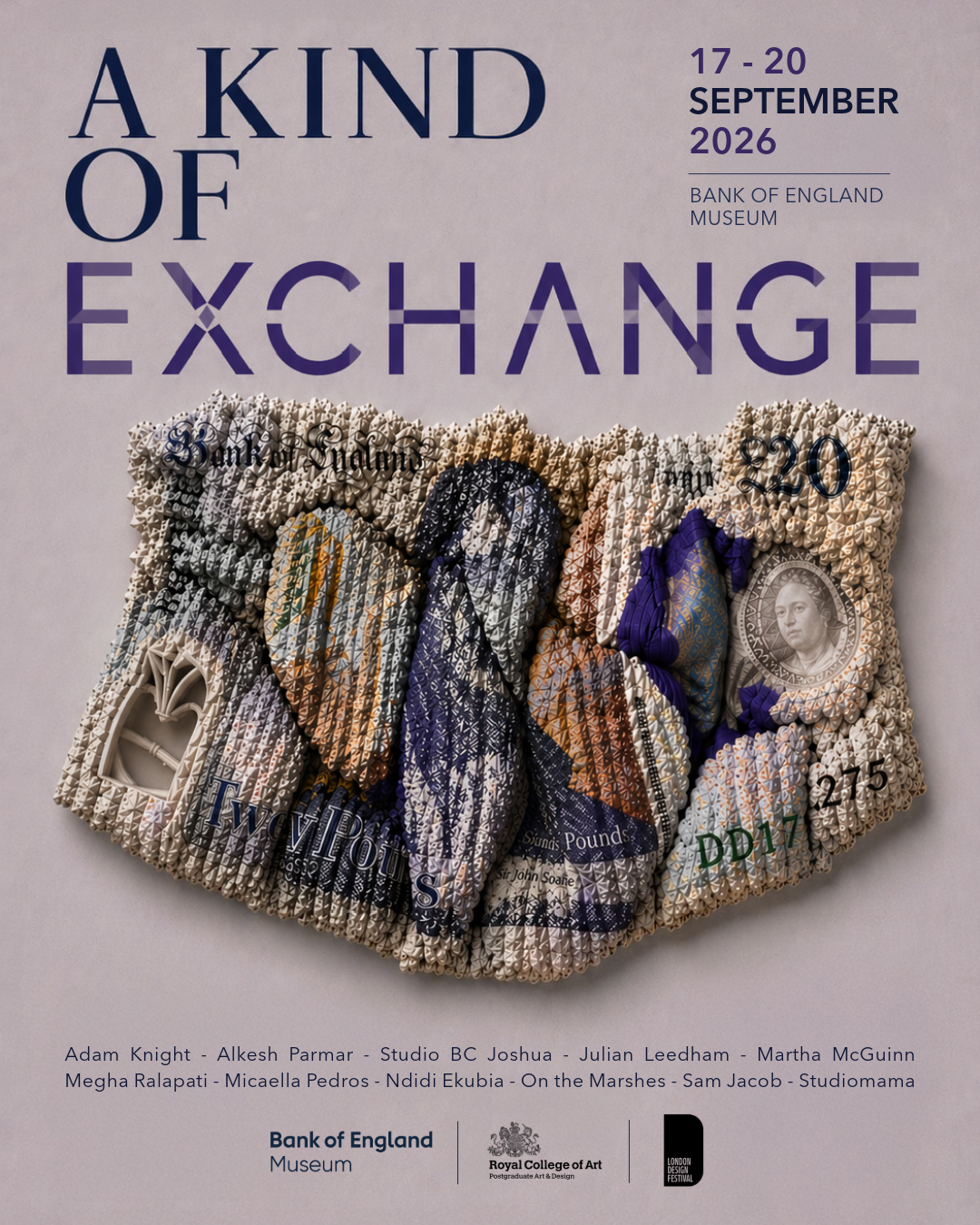
‘A Kind of Exchange’ is an exhibition of works that respond to the question: what connects us, materially, socially, and culturally? The exhibition connects the use of waste, reformed, and locally-sourced materials in a range of art and design practice as critical and generative, with architectural and decorative histories of the square mile, and critically alternative models and illustrations of currency distribution, dynamic, mapping and circulation.
This special exhibition as part of this year’s London Design Festival (17-20 September 2026) takes place at the Bank of England Museum. Selected practitioners Adam Knight, Alkesh Parmar, Blake Carlson-Joshua, Claire Darwent and Titus Davies, Julian Leedham, Martha McGuinn, Megha Ralapati, Micaella Pedros, Ndidi Ekubia, Sam Jacob, Nina Tolstrup and Jack Mama contribute works that engage with themes of material culture, exchange, commerce, colonial histories, and the Bank of England’s own archival narratives, including reflections on value, circulation, and transformation. Each practitioner has the rare opportunity to work directly with the Bank of England’s waste banknotes (shredded polymer and paper).
Organised by Alkesh Parmar, Ekua McMorris and Susannah Haslam (Royal College of Art) and Saskia Boersma (Bank of England Museum) for London Design Festival.

Material Curousity
‘The Open Vault’ was inspired by Boris Anrep’s mosasic ‘Lions Guarding the Treasury’ located in the Bank of England ‘s main entrance. Made from approximately £600,000 of old shredded bank notes, the piece reverses the idea of the vault. With the value of the object becoming the material and objects that are stored, hidden and showcased within the 75 various sized boxes becoming the items that are treasured.
Where is value?
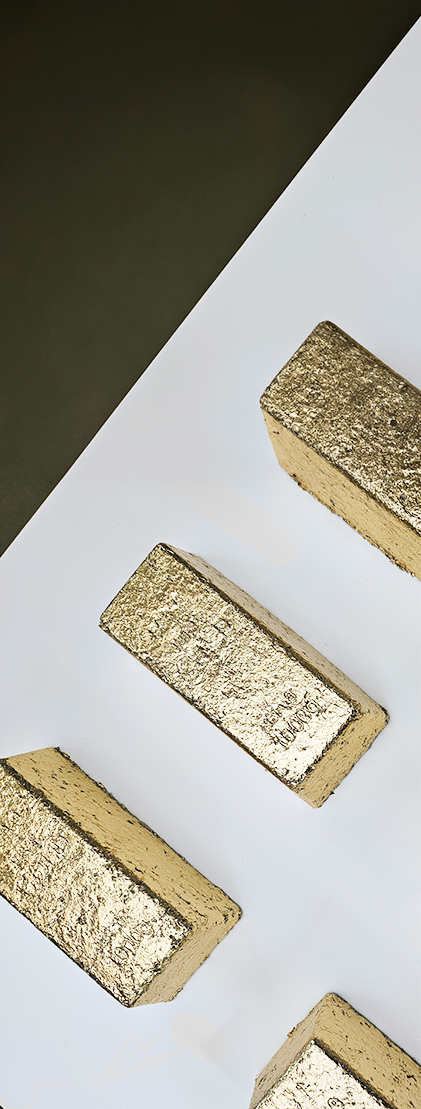
‘Bid on a Bar’ was an interactive piece that asked visitors to the exhibition to think about where the value of an object is stored? Made from approximately £600,000 of old shredded banknotes and then gold leafed, is the value in the materiality, rarity or desirability? Or perhaps its in the design, narrative or craftsmanship of the objects? What about intrinsic or artistic value?
With these considerations in mind, the visitors were asked to place a ‘bid’ for what they would be willing to pay for one of the bars. After the exhibition six bids would be able to purchase one of the bars at their determined price.
The Green Maker Initiative Book
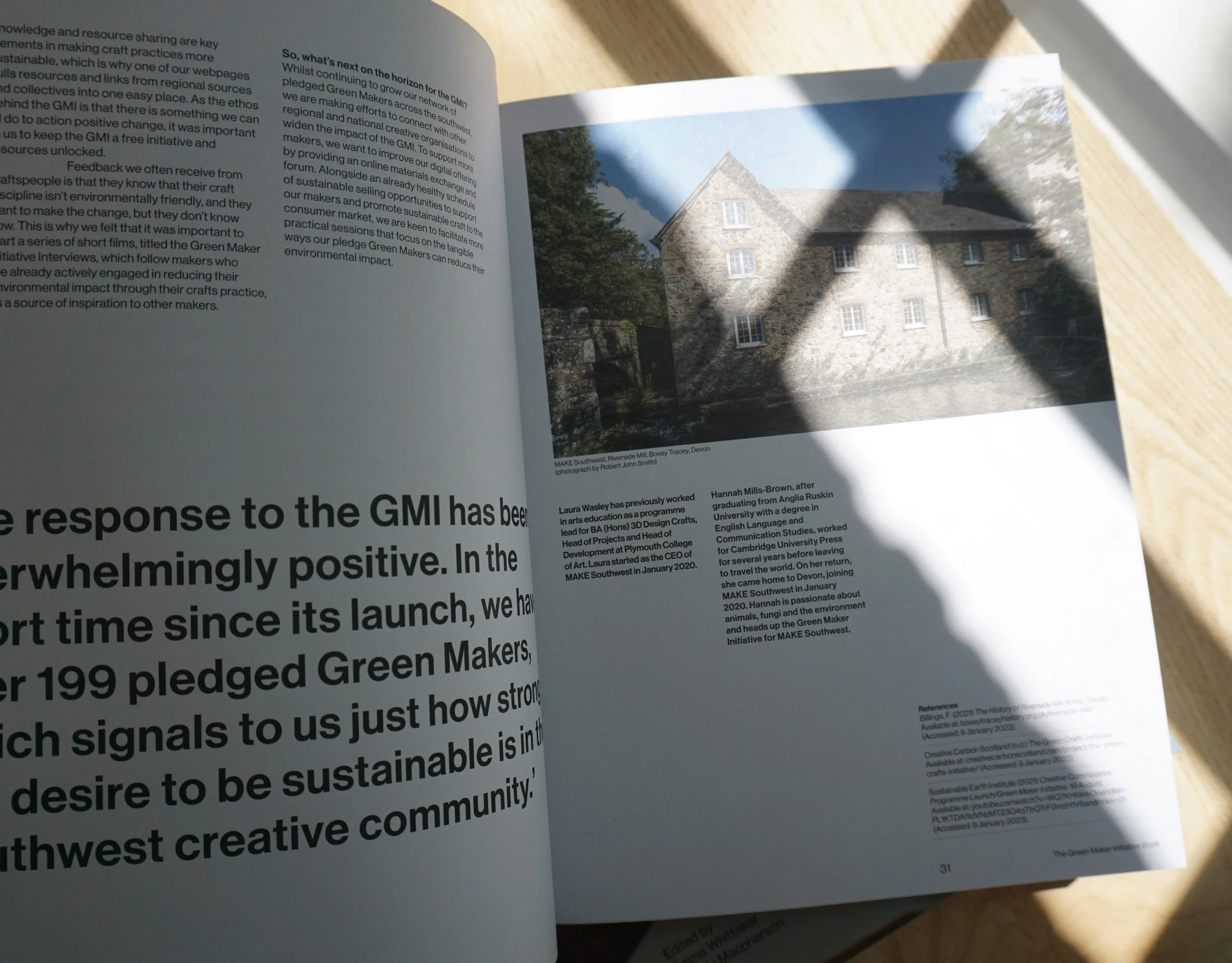
One of the biggest concerns of this age is the environmental changes taking place on our planet. The Green Maker Initiative Book asks what role designers, makers and consumers can have in reducing the environmental impact of objects, and even make a positive contribution to the world we live in.
The book presents practical strategies and approaches for designer makers to reduce the environmental impact of their craft drawing on research with Green Maker Initiative members, conducted by Emma Whittaker, University of Plymouth. The book is richly illustrated with photographs of makers’ work throughout and useful diagrams to inform practical action.
This book is for designers, makers and artists. The book is also for academics and students and those interested in creative industries and sustainability research. Finally, the book is relevant to anyone who wants to be inspired with practical strategies that make a difference to the way we engage with Mother Earth. The Green Maker Initiative Book is supported by the ERDF Low Carbon Devon project within the Sustainable Earth Institute at the University of Plymouth, MAKE Southwest, Arts Council England and the Crafts Council.
The book is printed on 'Revive' recycled paper, using vegetable inks, in the UK by local company, Short Run Press in Exeter.
Only available at MAKE Southwest*:
In-store: £18
Online: £23 (includes P&P) Click on the link to the right
2021
2020
London Design Festival - Brompton Design District


Circular design
Can manifest in numerous ways, materials can be repurposed and refurbished, industrial and commercial waste steams can be captured and utilised in different ways, products can be designed for repair or lease, bio-mimicry can help us develop better methodologies whilst renewable energy can provide the means.
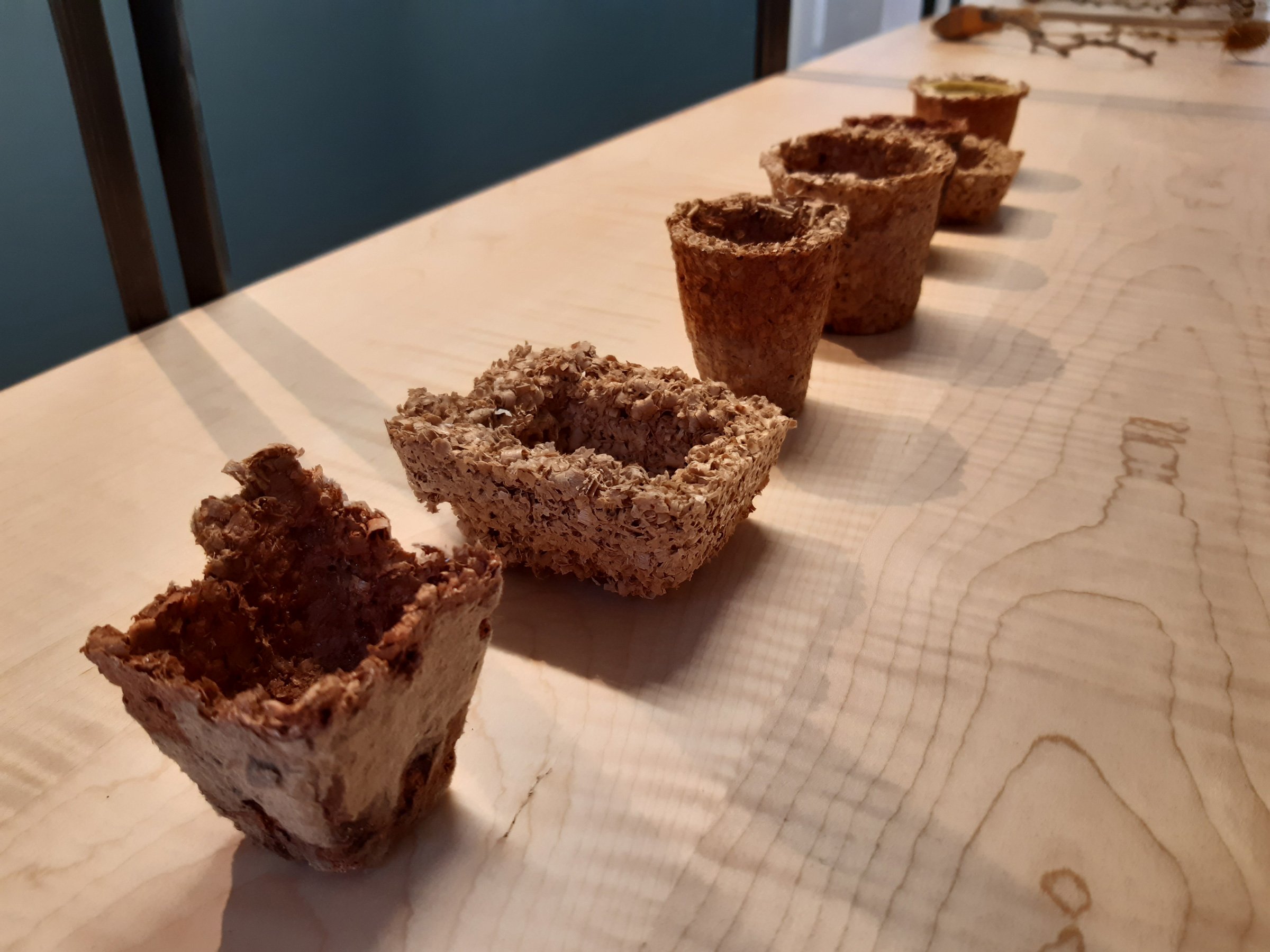
Pictured (above & right) Re-pot, (research project with King’s College London & Materiom) which mixed waste sawdust with other natural ingredients to create a series of biodegradable seedling pots.
Peter Marigold & Graduates
Re-pot is a research based exploration that began under the ‘Crafting a Circular Economy’ project funded by King’s College London. With a focus on sawdust (an abundant waste stream from Julian’s studio) and with the help of project partners Materiom. A variety of recipes exploring various moulds, sawdusts and organic glues were used to create a series of small seedling pots.
Although limited by funding, time and lockdown it was envisioned these pots would provide nutrients supporting seedling growth, breaking down inline with plant growth until both plant and pot could be replanted.


A report by Dr Lauren England & Julian Leedham
“This report documents a collaborative impact project ‘Crafting a Circular Economy’ conducted in 2020 led by Dr Lauren England (King’s College Londonand Julian Leedham. The project investigated circular design and economy opportunities for designer makers in the UK working at the micro and SME level and developed a network and online platform to support engagement with circular design and making, and sustainable practice more broadly. It aimed to address the economic, social and environmental challenges posed by the linear economy from a craft/design perspective. It also connected with a growing climate consciousness, consumer interest in sustainability and industry agendas for resilience and sustainable growth. The project built on an AHRI funded project into circular economy practices for designer-makers.”
To read more of this project please feel free to download the full report here.
Iceland, October 2018.
Crafting a Circular Economy
2020
2019
On Growth & Form
For London Design Festival 2019, Shoreditch district, ‘On Growth & Form’, was a gcollaborative show that presented the work of five new designers, who reflected on how industrial processes and manufactured objects can imitate, adapt or modify the rules of growth and form that shape the natural world."
Exhibiting a trio of plant units inspired through biomimicry each unit created a home for the various stages of a plants lifecycle.
PINNASECT: a compact cylindrical greenhouse design to nurture and protect young growth, its individual perspex leaves are easily removed for quick access, whilst creating a gentle ‘rustle’ in the wind.
HOOP: a tiered plant unit for indoor or outdoor use, that creates a dedicated space for various young plants, creating a vertical garden!
MESH: a standalone unit that can either be used as a stand of climbing frame for an individual and more established plant. The three units together act as a cyclical support structure for all stages of plant growth.
Lastly a series of hand blown glasswork was commissioned to cultivate the propagation of herbs and cuttings.


